spring/
summer
2020
scroll down

a note from the editor

Whoever you are, wherever you are, welcome. I’m so grateful you are here.

I love fantasy. I love imagining things. I love creating made-up people and worlds, dialogues and events. Even this magazine at one point was just a neat idea inside my head. I wondered, What would this be like? What would it look like, feel like, say?

I’ve been a writer since I was a child, an enthusiastic gamer — exploring worlds crafted by other dreamers like me — since I was a teenager and a lover of all kinds of books and films and music since as long as I can remember.  

When I’m stressed out and life feels out of my control, make believe is where I’m likely to hide away until the clouds part and the sun comes out again. It can be quite difficult for me to focus on a good day, so these days have been particularly challenging.

Over the past handful of weeks, I’ve watched just about every Marvel movie in the story’s chronological order. I’ve allowed myself to unwind in the made-up realms of several simulation and sandbox games. I’ve picked up books I hadn’t touched in a long time, including some of my own. And all this while still juggling the realities life brings us all. Bills. Taxes. The health concerns for loved ones.

As a doula, there comes a time when I speak to my clients about what to expect during labor — I tell them that to allow labor to do it’s work they’ll have to tap into the activities, words, foods, etc. that support their body’s natural momentum. I tell them they can help the oxytocin flow by doing those things that give them the “warm fuzzies.” I say, surrender to your natural rhythm. Don’t be afraid of the big waves. Go where they take you.

Lately, I find those words stirring in my own mind, speaking to my own body. The only way through a difficult time is through it. And the best way through is with education and a caring support system.

I’m so grateful to the people around me who’ve encouraged me to not only allow myself my comfort measures, but also to protect myself in outside spaces, to build my body’s defenses through food and drink, and to invest in my quarantine lifestyle in ways that promotes both peace and productivity.

This issue of Everyday Birth Magazine was on an entirely different course before the pandemic began. But with the incredible support and efforts of all of these photographers, contributors, parents, etc. we put something together that can speak directly to where we are right now, what we’re going through, how we’re already equipped and what we can do to even better equip ourselves to get through healthily.

I hope this finds you well — safe and secure — and that it offers you some knowledge, comfort, and smiles.

Cheyenne Varner
Executive Editor
traci lester
@traciphotographs

content

Click the title to go to that section
Stress + Relief
How the body handles stress + tips for easing it
A Better Way to Breathe
Inhale and exhale to healing
Mind Your Spine
Dos and Don’ts from a chiropractor
Daily Check-Ins
A list made for you to maximize the health of your day
Home, Birth Center, and Hospital Birth
An intro to what option fits you and stories from three parents.
Home? Birth Center?? Hospital???
Thoughts for when you can’t decide where you want to go (maybe again!)
Food for Health
Fun, healthy foods to add to your plate
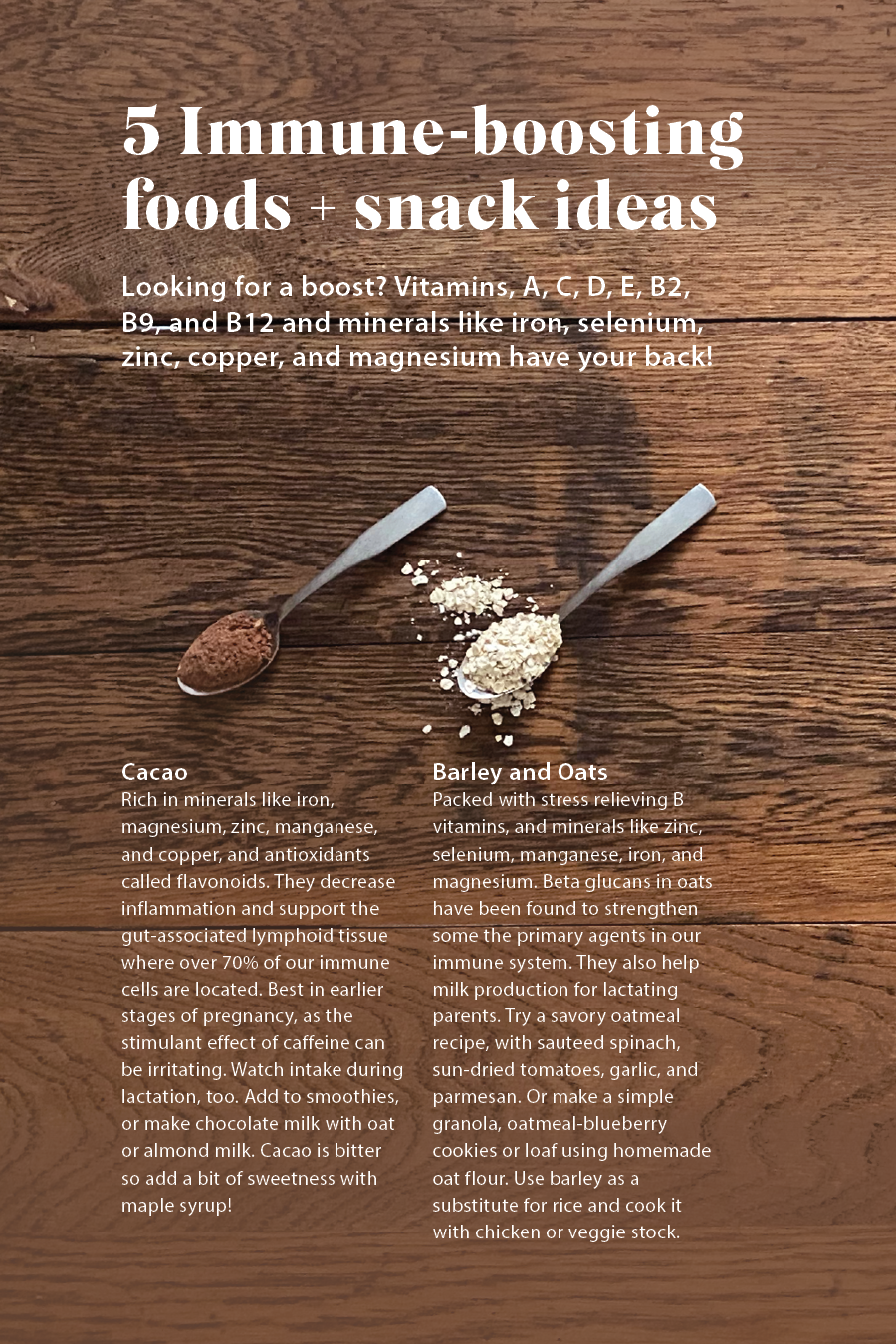
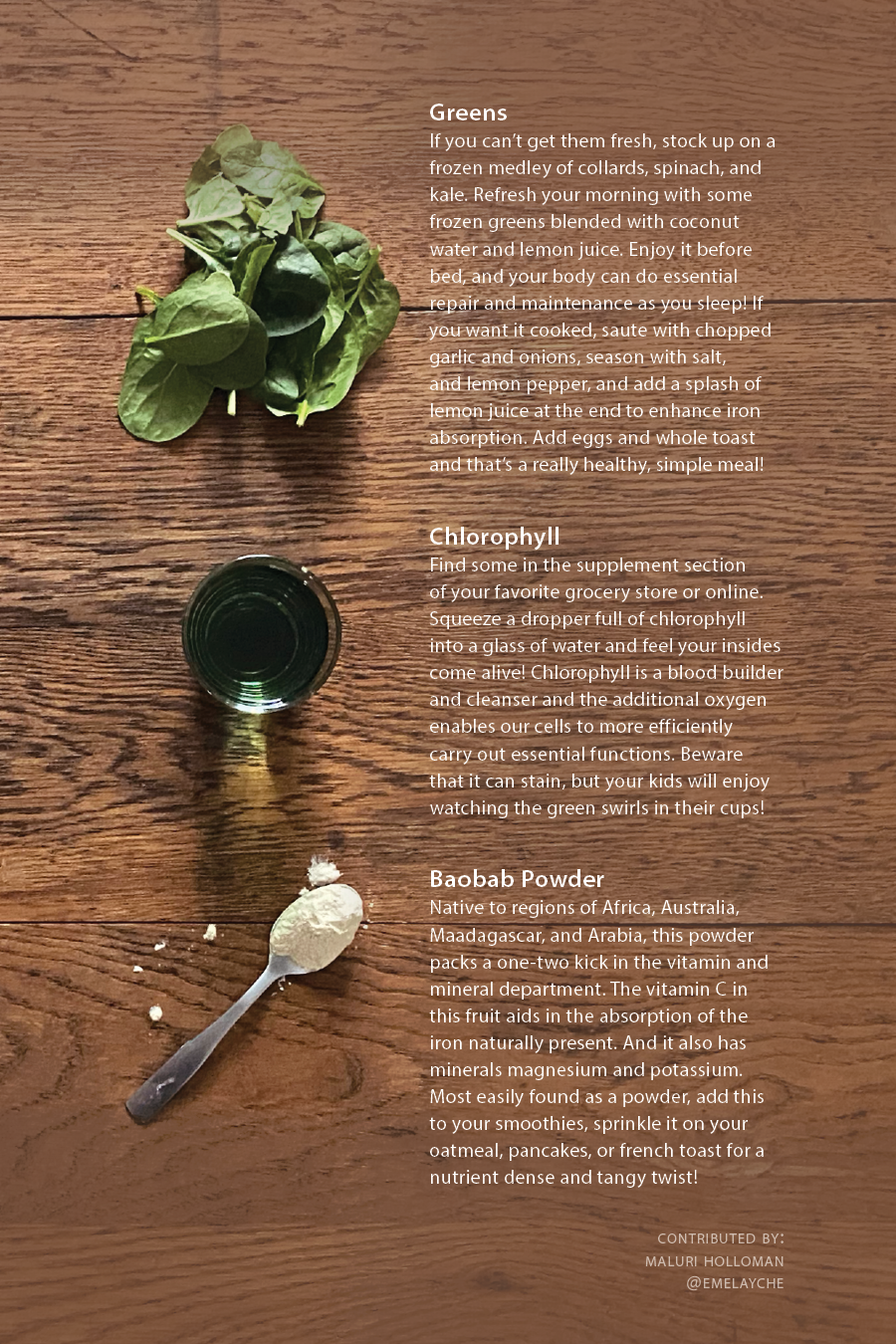
5 Immune-Boosting Foods + Snack Ideas
Even more nutritious foods to add to your day
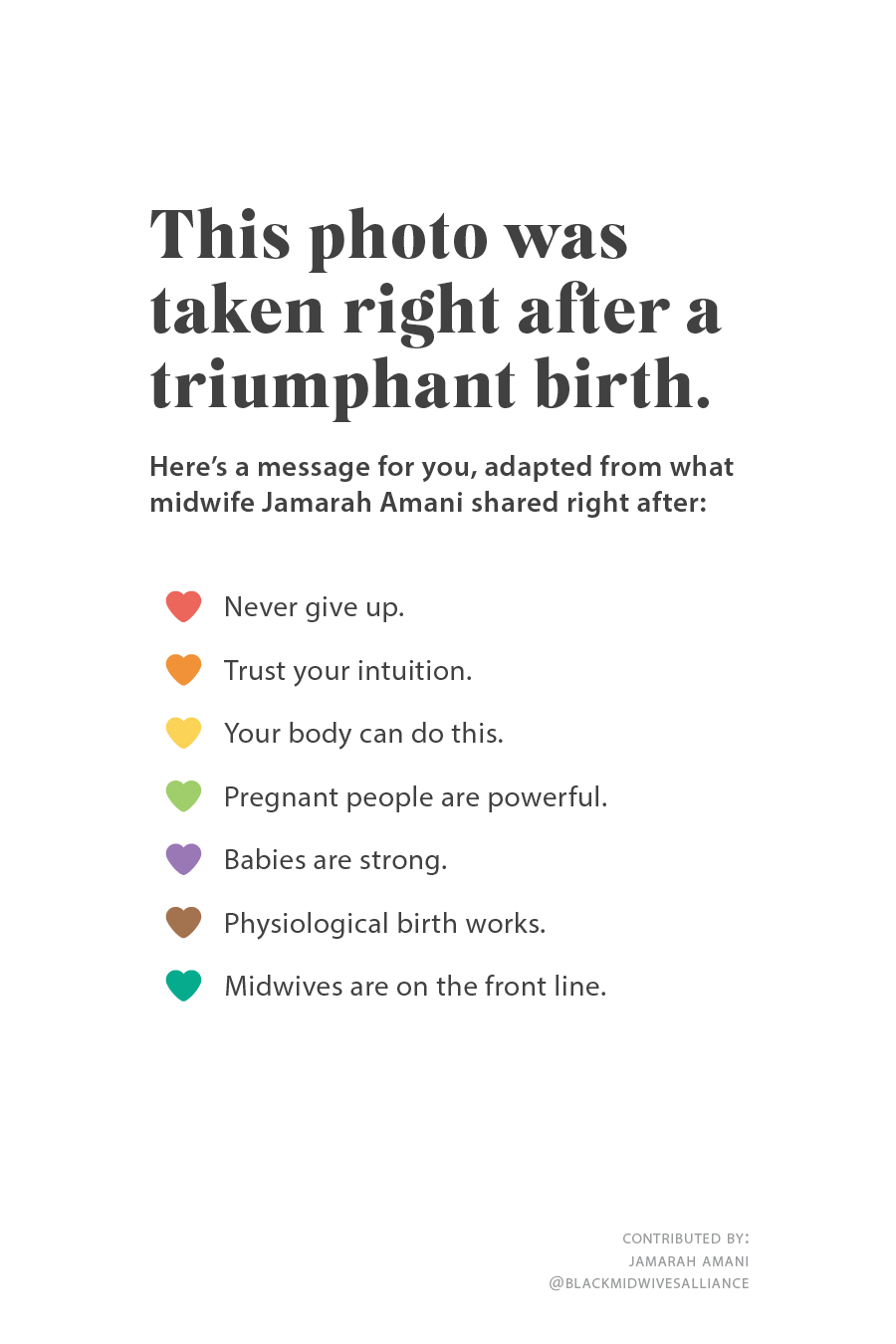
Triumphant Birth
A message of power and encouragement
A Day in the Quarantined Life
Three families share photos + more
Let's Craft, Kids!
An easy DIY craft from entrepreneur + mom of three
5 Things to Know About Virtual Support
What virtual support has to offer your experience

Stress is a normal feeling.

Stress isn’t actually a bad thing. It has a purpose in our bodies, and our bodies are designed to take care of stress when it happens!

The Nervous System
The autonomic nervous system is the “autopilot” of our bodies, allowing various systems to work without us doing a thing. It’s broken into two basic parts: the sympathetic nervous system (SNS) and the parasympathetic nervous system (PNS). When allowed, these two operate like a tag-team that takes care of you.
The Body's Natural Protector
The SNS activates when we feel threatened by real or perceived danger and, when it does, we automatically move into “fight, flight or freeze” -- all operations not necessary to survival shut down; blood rushes out of your brain (bye bye rational thinking) and into your large muscles; stress hormones flood the body. All of this happens so that we can protect ourselves from that danger.
What Gets in the Way
Even though this is an automatic process — effortless, in fact — things can get in it’s way. Usually this happens because: 1) we prolong stress through thinking of and replaying stressful moments (the body reacts to stressful thoughts like stressful experiences!) or 2) we get stuck IN ongoing stressful conditions (and we don’t know how to reset in the in-between, even if those in between moments are brief).
The Body’s Natural Reset Button
As soon as that real or perceived danger is gone our beautifully designed, automatic system activates the PNS so that we can regain balance, normalcy, homeostasis -- the stress relief.  The PNS (“rest & digest”) allows all systems to return to normal: we breathe more easily, our muscles relax, we think more clearly, our emotions become more stable. Our body does what it needs to do to reset and undo stress.

Relief comes in many forms.

To prevent the negative impact that chronic stress can have on our bodies, there are many things we can do.

Start with the End Goal
It’s important to “start with your why.” Your “why” is helps you act and reach for your goal — it’s what keeps your actions connected to purpose. So, take a moment to really identify and name why it’s important to you to manage stress. What is the reason you want to take actions to reduce the impact of stress on your body and mind?
Know What Works (for now)
In order to reduce stress well, we need to know what activates our PNS - what allows us to feel a sense of release, of relaxation, of ease. It may not be the same this year as last year, so it may take some “trial and error” exploration. Be curious and be kind with yourself. If something works for someone else, but not you, that’s okay! Your self-care is unique to you.
Clarity over Confusion
After it’s clear what supports you and why you are choosing to do it, you can take simple, easy, and purposeful action. By cutting through the confusion and overwhelm, you free up emotional, mental and physical resources (which can otherwise make you feel even less energized) to be able to take actions, small or big, that support you.
Some is Better than None
It really is true. Some (fill in the blank: exercise, deep breathing, yoga, nourishing food, hydration, reading) is better than none. So, start small and make it easy. As you begin to feel the positive effects, allow yourself to naturally include more. Putting extra pressure on yourself for self-care kind of misses the point. Recognize the cumulative effect of many small actions throughout the course of your day/week.
ellie burke
@ellieburke.life
patience salgado
@kindnessgirl

A better way to breathe

When stressed, our breathing can become shallow. Breath that engages the diaphragm is good for mind and body.

Be patient with yourself. Visualize as you breathe. Imagine being on the ocean shore, waves rolling in and out. Match your inhales and exhales to the waves.
one
Place one hand on your chest. This hand should remain relatively still as you breathe. Place the other hand right below your rib cage to feel the diaphragm expanding.
two
Take a deep breath in through the nose for a count of five. Invite the breath downward so that you feel your belly rise under your hand. Do not force the breath. Allow it to build slowly as you practice.
three
Without pause, and with a slightly open mouth, exhale and allow the belly to relax, moving back toward the spine for a count of five.
four
Without pause, bring the inhale back in through the nose for five counts allowing the belly to rise, followed by the five-count exhale releasing the belly to the spine. Continue for five minutes, or longer if you practice daily. If you ever start to feel light-headed, lay down for the rest of the time.
Breathing from the diaphragm is good for more than just getting oxygen into the body — it’s important for posture, organ function, pelvic health, and more. As you practice this breath, what do you notice in your body?
lyra parker
@lyra.parker
chelsea schmidt
@cschmidtphoto

Mind your spine

Chiropractic care allows the nervous system to adapt to every day stress by correcting misaligned areas of the spine.  

Here are a few dos and don’ts to maintain proper spinal alignment during times of stress:
Do...
go to see a Chiropractor.  If you are pregnant, find one who is Webster’s technique certified.
do...
be mindful of your posture regularly.  Your ear, shoulder, hip, knee, and ankle should all be in a straight vertical line when standing.  Your ear, shoulder and hip should be in a straight vertical line when sitting and your knee in a vertical line with your ankle. *Have someone take your picture to see if you line up.*
don't...
“crack your own back”. By doing this you may be misaligning the spine even more which will do more harm than good. Go to your Chiropractor to be checked.
Don't...
sleep on your stomach.  The best sleeping positions are on your back with a pillow under your knees (not if you are pregnant) or on your side with a pillow between the knees and your head in a neutral position. When pregnant sleeping on your left is ideal.
Let’s be real, the spine is the last thing you want on your nerves!
dr. cara corbelli
@renewchirorva
destiny loera
@unforgettablebirthbaby

Daily check-ins

When we’re mindful of our bodies, listening for and responding to the signs of stress, we teach ourselves new ways to heal.

how you wake
Natural rhythm? A blaring alarm? A little bird outside your window? Try starting the day with a wake-up that’s not startling and a glass of warm water. That wakes your sytem up gently, too.
Try a Little Tapping
Techniques like EFT, self-massage and chair yoga can give a sense of hugging yourself. You can tap, rub, or move yourself into a calmer state of mind.
loosen your mouth
Do you clench your teeth? Don’t fret, we’ve all been there and felt the sore jaw after. If it’s hard to check-in naturally, make a reminder on your phone or place a post-it note in a common space of your home.
have you eaten?
An empty stomach doesn’t help the body process stress. And intake of more sugary, carbs, acids and unhealthy fats aren’t great either. Find a balance with foods and drinks that benefit the body.
work and life
Separate the two as best you can. When non-work ideas come to mind while working, jot it down to re-jog your memory later. Find a hobby that helps take your mind off of work. And honor your need for time off.
going to sleep
Create an environment that ushers sleep in. Avoid your phone and television, use a pen and notepad for idle thoughts, and practice your breathing.
victoria "v" lynn
@alluneednaturals
traci lester
@traciphotographs

home, birth center,
and hospital birth

a brief intro to what fits you

home
Does this fit me?
Those who choose home birth often trust their knowledge of their body and health needs, and may even feel uncomfortable with the traditional medical system and hospitals due to histories of racist and unjust practices.
What do I need?
A home birth kit. This usually includes basic supplies like chux pads, gloves, gauze, lubricating gel, bulb syringe, cord clamps, peri bottle, cleansing solution, and alcohol prep pads, among other items suggested by the Midwife.
Can I afford it?
Home birth expenses are often paid out of pocket and provide for the Midwife, Midwife’s Assistant, and any necessary supplies as dictated by the Midwife. Costs range from $1,500-$3,000.*
birth center
Does this fit me?
Those who choose a birth center may be seeking a positive balance between birthing at home and birthing in a hospital. The birthing person likely wants a collaborative partnership and nurturing relationship with their Midwife, and is engaged in the decision-making process of their care.
What do I need?
An overnight bag with basic toiletries, and snacks or drinks, if desired.
Can I afford it?
Costs are different based on where you live and what’s available. On average, the cost ranges from $3,000-$6,800; some insurance companies may cover a portion of the expenses.**
hospital
Does this fit me?
Many people give birth in the hospital because they trust the traditional medical system as the authority on pregnancy and childbirth, have what’s considered a high-risk pregnancy, or want to go where their Midwife or OB always attends births.
What do I need?
Hospital pre-registration paperwork, your insurance card, your ID, and baby’s car seat installed. A hospital bag packed with basic 2-3 days of overnight toiletries, and other items to make the space comfortable.
Can I afford it?
The national median cost of a childbirth hospital stay was $13,524 in 2014, according to the U.S. Department of Health and Human Services, but most expenses for the birthing person and newborn are covered by health insurance if in network.
*These are estimates based on national averages. Exact costs vary depending upon the care provider.
**These are estimates based on national averages. Exact costs vary depending upon the care provider and individual insurance coverage.
kenya fairley
@kenyathedoula
WANT MORE? REAd the full breakdown

a

home birth

story

denae's story
“November 13, 2019 had to be one of the most amazing days of my life.

My journey began back in March when I found out I was pregnant. I knew right away that I want to have a home birth so I let my husband know and he said whatever you want to do I’m going to support you. Once I entered my second trimester I reached out to NiKiya to be my doula and she put me in touch with Nancy, my Midwife. I met with Nancy early June and I’m so grateful and thankful because she coached me and prepared me from beginning to end.

By 6 o’clock in the morning, I had some contractions and went back to sleep. DerMon was getting ready for work. I told him I think I’m in labor but I’ll keep you posted just go ahead. I texted and called Nancy around 9 and 9:30 and she said go do some walking.  So me being the person I am, I rearranged my two younger sons' room and then my contractions really started to kick in. So I called Nancy again to let her know. I said that I was okay, I could handle the pain, so she said let me get through my last two appointments, and to call her back in another hour or if anything changed.

So I continued to do my housework. Around 11:45 I called her as I went to go use the bathroom and the rest of my mucous plug came out. Contractions started to get stronger. Around 12:30 I was sweating. When I get to the bathroom  to take a shower, my water broke. I called DerMon and told him come on home and  I called Nancy back and she told me to go ahead and set up my nesting  area and get on all fours. I did just that after I fixed the boys lunch, lol. Surprisingly I felt that the contractions were more painful before my water broke.

My husband was there in the next 10-15 minutes. And as soon as Nancy got there she burst into action setting up the birthing area. By the time the tub was filled and Nancy checked me I was fully dilated. Nancy taught me to listen to my body so as each contraction came, I gave a big push with my husband holding me. I’m squeezing his hand and my two little ones watched on the side of the tub.

With five big pushes Dorian Marcel Threatts made his big entrance — 6 pounds and 4 ounces at 2:06 pm. I relive the moment over and over in my head and I’m so proud of myself. The first part of my labor I did everything on my own with my three (Darien) and four (DerMonjr) year-olds. It was one of the best experiences in my life and I’m just blessed.”
Denae, 28
Richmond, VA
photographer: patience salgado
@kindnessgirl

a

birth center

story

bianca's story
“I received prenatal care from an OB/GYN’s and planned to have a hospital birth at first. Once I knew my other options, I decided to have a waterbirth. I chose to birth at Premier Birth Center because of their fantastic midwives, comfortable birthing environment and personalized attention.

On the morning of March 9 I noticed some blood in my underwear. I was so excited! Finally! The day went as normal - walking the dog, eating, watching TV, napping, etc. James stayed home from work but labor was not starting.

I didn’t feel any surges (another word for “contractions”) until the evening. At 10:30 pm I felt wetness leaking down my leg. Sure enough, my water had broken. I pulled out the red wine and poured myself a glass. My midwife said it would be OK and help me sleep. I also started baking a birthday cake for my baby girl. Once the cake was in the oven I felt more fluid so I took a shower.

I used Hypnobirthing techniques to sleep and breathe through surges. I woke ready to go. Mayanne welcomed us at the birth center at about 4:30 am with open arms and a big hug. I was 3 cm dilated and the baby was in a posterior position. I slept for another 4-5 hours with pillows between my legs. When I woke up around 9 am midwife Sharon was there. My mom and sister arrived, too.

I continued to labor. I bounced on the birthing ball. I soaked in the warm tub. I walked the hallway with my husband. We danced (for a little bit) to the birthing playlist that I created. Since the baby was posterior and needed to rotate, I did the side lying stretch on the edge of the bed with the help of James and the midwife assistant, Heather. In the early afternoon Sharon used the rebozo cloth to ‘shake’ the baby down. It was actually relaxing. Around 3pm I took a bathroom break to pee and felt some burning. I reached down and I felt my baby girl’s hair!

My mom knew that I really wanted a water birth so she rushed into action, filling the tub while my sister measured the water temperature. Being in the warm water made me so relaxed that I crowned for over an hour! With every surge I pushed the baby down a little more.

After one final push, my baby girl emerged. James received her and brought her to my chest. Finally, she was here! Nya Lynée Lankford arrived at 5:03 pm at 8 pounds 14 ounces and 22 inches long. My husband kept saying, “You did it! You did it!” I smiled, turned to him and said, “No, honey - WE did it!”
Bianca, 31
Gainseville, VA
photographer: cheyenne varner
@cheyvarner

a

hospital birth

story

kamaldeep's story
“During my 40 week appointment, my midwife gave me a membrane sweep and I was 2 cm dilated. Later, after I went for a walk, I started feeling a lot of pressure.

After some sleep, at 2 am I went to the bathroom because I noticed bloody discharge. While in the bathroom I started experiencing diarrhea and really bad lower back pain. I took a shower with hot water and then had a bath right after to help me ease the pain.

I realized soon the pain was contractions. So, I woke Gursheel and told him to start timing. My midwife said to page her when the contractions were lasting 1 minute, but mine were only 30 seconds.

To cope with the pain, I got on all fours and this time, when the contraction came, a gush of green/yellow water came out as well. We called my midwife at 4 am and she came around 5 am to check me. I was 2-3 cm dilated but the colour of my water meant the baby had pooped inside of me. She said I wasn’t quite ready to be admitted to the hospital yet and to call when contractions were closer.

Around 9 am my contractions were close to 1 minute long, Gursheel called the midwife, and she told us she would meet us at the hospital in an hour.

Around 10 am she checked me — I was still only 3 cm dilated, but because of the meconium, the hospital would admit me. Relieved, I asked to get the epidural and soon after, the anesthesiologist arrived. The pain relief was instantaneous.

I was a complete 10 cm and ready to push by 4:50 pm. During this time, I chatted with my moms and drank orange juice, water and apple juice. I regret drinking the orange juice, because as soon as it came time to push, my whole body started to shake and I started to vomit.

I was feeling pretty good overall and pretty motivated to push but every time I did, I would puke, which was really draining. Partaap Singh was born at 6:21 pm with the help of a vacuum and the OB on call. The umbilical cord was wrapped around his shoulder, so although I was pushing really hard, the cord was just pulling him back. There was a team with a pediatrician in the room that took him and checked on him as soon as he was born. I delivered my placenta, had a third degree tear that was stitched up and then they pushed on my stomach to get out fluids, which I vaguely recall being painful. Immediately, I felt completely drained and exhausted and I had a fever from vomiting.

Partaap Singh was born at 7 lb 13 ounces and 54.5 cm long with black hair, long hands and feet, and just a whole lot of cuteness.”
Kamaldeep, 29
Toronto, Canada
photographer: gursheel singh
@gursheelsingh_
stephanie cabrera
@rebornfromwithin

home? birth center?? hospital birth???

You thought you knew, but now you’re not sure.
What to do when you’re changing your mind.

Take a deep breath.
Talk your worries out.
Anxious breathing tends to be short and shallow and create more tension in our bodies. A good deep breath refreshes your mind and your body. Talking out our worries is refreshing, too. The people we confide in often help us see avenues we couldn’t see on our own, and realize the big scary worries in our minds aren’t so grim.
Remember what won’t change
+ why this change is good.
Affirm yourself. You have carried and grown your child and you will birth them into your love and your home. While shifting may be stressful, the change itself is probably happening because you want to avoid negative things and invite positive things into your experience. Yes? These are good things. Breathe that message in.
Talk to your insurance + make a financial plan.
Call your insurance provider to talk about your circumstances. Ask for comparisons of what they would cover if you chose different options. Ask if they have exemptions for out-of-network providers in extenuating circumstances. Talk to your care provider, too. People who work in healthcare know that the system is difficult and sometimes broken; they may have prepared options for this.
Gather your support team and community.
Create your list of professional and personal support people. The professionals are medical personnel, doulas, lacation consultants, etc. Personal are friends and family. These are the folks who support your decisions, advocate for your preferences, and bring you peace, comfort and safety.
Prepare for a mental and physical journey + healing in postpartum.
It’s easy to get so caught up in preparation for the “big day!” that we forget to plan for the many, many just-as-big days after baby arrives. Healing during postpartum is a guaranteed part of the birth journey. Ask your potential care providers about what their capacity and plan will be to support this period of your experience, too.
the educated birth
@theeducatedbirth
andrea nicole
@andreashopsforyou

Food for health

We all know that what we put in and on our bodies matters. But where do we start? Here’s a whole box of inspiration curated with care:

green curly kale
Leafy green vegetables like Kale are packed with nutrients that help balance sugar, support bone health,  tame toxins, boost the immune system and more!
freshly laid eggs
Eggs, freshly laid or not, are a great source of protein for your diet. They’re filling, healthy, and studies say they can even help you lose weight.
hot pepper jam
This jam has several hot peppers and fruit (habanero, chili, plums, and peaches). High in Vitamin A, B, C K and potassium, it’s great on your morning slice of wheat toast.
pink oyster mushrooms
Mushrooms are another nutritous addition to any diet — low-fat, no cholesterol, with good vitamins, protein and fiber.
radish microgreens
Radishes are high in potassium and known to support healthy blood vessels. Radish microgreens pack even more nutrients into their tiny little stems — of course, high nutrious value is true of all microgreens!
lavender massage oil
Okay, not a food, but still good for you! More than just a pleasant scent, lavender is believed to have health benefits that can ease anxiety, headaches, digestion aches, and more.
nikiya ellis
@thediversedoula

A Day in the Quarantined Life

We asked families all over to take pictures for 24 hours and tell us what one of their days was like. Here’s what they sent us...

the braford family
Ida + Jake + Caroline + Lelah
I wake up, feed Lelah, and she goes back to sleep with my mom.  C and I wake and cuddle. We brush our teeth together and go downstairs for breakfast.  Either my mom or I cook, usually a savory Indian crape called dosas, or gluten-free eggs in a basket with turmeric tea and lots of coffee.  Jake is able to join us for breakfast and lunch now that he is working from home.  Whenever he goes into his office C has a breakdown and we distract her with a book or fun activity until we’re back to hopping, legos, making up games, pretending, creating etc.  Lelah usually has a bottle and goes to sleep while the three of us ladies have a morning prayer.  We’ve been using a lovely site called Northumbria, which has Celtic daily prayers.  We make it interesting by ringing triangles and lighting candles and C loves it.  I try to get some yoga in and Caroline enjoys climbing on me and imitating some positions.  She is especially good at the downward dog and plank.  Lelah loves her bouncer and practices holding up her head and checking out things.  Then we all have lunch together, and then it’s nap time. Lelah is trying different solids (we are hoping she has no allergies and since none of us have any). This is usually my one-on-one time with her; she drinks her bottle, does some tummy time, and just cuddles with me.  After nap, we drink chai tea and head outside if it’s nice. Lately we’ve been working on our garden.  Before we blink it’s dinner time.  Either my mom or I cooks while the other watches the girls.  After the meal we go on a walk or do more planting. Then bath time and bed time. Some days it’s a quick one and a half hour process, other days it takes 3.  This day, we were all three so tired that we didn’t get much of an unwind time.  There are always teary moments, tired, frustrated and angry ones all muddled with the sweetness and joy and craziness. The emotions can get big and hard to document. But I hope these photos are a view into our lives.
ida braford
@idapar1
the agaba family
Laura + Robert + Eden + Etta Mae + Ivy Ann
Our days have fairly predictable rhythms, day in and day out.  We get up and eat breakfast together after having done our morning room chores of making beds and tidying up.  Breakfast is usually a fairly noisy affair; eggs and veggies or oatmeal accompanied by music, dancing, banging, singing and frantic communication before my husband has to begin working from home in a makeshift office in our upstairs bedroom (which is not the pre-covid-norm). The girls help tidy up and then we head upstairs to get dressed and brush teeth.  I ring the 5-minute school bell at 8:25 and, with any luck, we are sitting down to morning-time at 8:30.  This part of the homeschool days includes everyone, even the baby.  We read the Bible, sing whatever hymn we are currently working on, recite our memory work, and read poetry.  This part of the day feels so sacred and centering, and I love having all the girls together and attending to the same activity.  Afterwards, the two younger girls are free to play nearby while I work primarily with Eden.  At some point I put the baby down for her morning quiet time in her crib (where she listens to an audio book and plays/snoozes for about 45 minutes).  I try to get the rest of school done before she wakes up because she is 1.5 and having her around is not conducive for any more focused lessons.  After school and until afternoon rest time is mandatory outside time.  We are fortunate to have a great yard for adventure and play, something I dont take for granted in a time where we all must remain at home.  After lunch there is a mandatory rest time from 1-3 where everyone either sleeps or plays quietly listening to an audio book  (basically they are not allowed to need me).  This is when I try and take a moment to read, write, do something for my own mental health, or work on my photography business.  I have a rule that I don’t do anything while they are resting that I can do while they are with me, so i try to stay away from laundry, cleaning or cooking; all tasks in which they take part.  After rest time we spend the remainder of the day being outside, working on skills like cooking, baking, cleaning (dance-party-ing) or other chores until dad is done with work around 6.  Dinner together is a huge part of our day and we protect it very intentionally.  Baby goes down at 7, and the big girls between 7:30-8 and then the house settles down with some evening chores and a few hours of peace before another full day.    
laura agaba
@lauraagabaphoto
the johnson family
Ayé + AJ + Beans + Buggs
Buggs starts the day off by knocking on our bedroom door, coming in, climbing in our bed and telling me, “I’m so hungry mom, I’m so hungry.” They have already been up for an unknown amount of time, playing and watching their iPads. We cuddle for a bit in bed and I coax AJ out of bed to get the kids food. Breakfast is frozen waffles we made earlier in the week. I can smell the cinnamon as they heat up in the toaster. AJ asks if I want coffee; I do. Buggs runs up and shows me their teeth, freshly brushed. I call Beans out of their Disney/Netflix/Make-Up game induced zone to say good morning and give their brain and eyes a break. Remind them to brush their teeth and wash their face and see what they want for breakfast — cereal. Buggs get the table and chair out to eat, Bean grabs their bowl out of the dishwasher and pours their own cereal. I help out with the milk, the jug is still a little too heavy. Buggs asks for more syrup. AJ and I talk about what we wanna do today. Buggs rolls past on their bicycle, I say, “Did you finish your breakfast? Where is your plate?” First FaceTime call of the day from mom, “What y’all doin? Hey Bugg! Hey Shug! 4 year old convo... Alright talk to you later!” We all end up on the couch. Beans is happy on their bed oblivious to world. Bugg asks if there is school today... Can we go to the park? No school is closed, and there are too many people at the park. Bugg yells, “Mom! Mom!“ Yes? “Watch this!!”... proceeds to dance. I’m on my phone seeing how many deliveries we will make today. They are semi excited we will go out. AJ fixes lunch and gets them to nap while we figure out logistics. We haven’t been outside in 2 weeks. Between the weather, our landlords redoing the floors above us, and redoing the roof we haven’t had access to our yard or peace and quiet in a while. We are all a little on edge, each of us doing our own things. Bugg sings ABC’s that I must listen to with all my focus and attention. They do their big kid thing and get dressed. We practice putting on our masks that Giada made for us. We reinforce how important it is to protect ourselves and other people. If you see someone put on your mask, it has to cover your nose. Don’t get close to people, give air hugs. Beans make sure you remind Buggs and take care of them. Don’t touch anything, use hand sanitizer if you do. Delivering Plan B’s to folks is not the exciting time they were hoping for. Beans is counting down the deliveries we have left, irritated they have to be away from their iPad. We get back home we take all of our things off in the back room: shoes and jacket. We wash our hands immediately. Settle in and I cook dinner for the kids. They eat and go to bed with a movie. We talk and talk about what we are gonna eat. Then stay up way too late to do it all over again tomorrow.
ayé johnson
@the_do_you_doula

Let's craft, kids!

Life in quarantine with little ones challenges us to create whole new ways to be creative. Here’s a craft that makes the precious toilet paper in our homes even more valuable:

what you need
  • Toilet paper rolls or paper towel rolls
  • String
  • Hot glue gun or stapler
  • Stickers
  • Crayons, colored pencils, and/or markers
instructions
If using paper towel rolls, cut them in half first. Arrange all the items you’d like to be used as a part of the craft on your preferred crafting space. Tell your little ones that they’re going to decorate their own special binoculars today! Once they’re done designing each side, you can attach the rolls to each other, and the string to the rolls with hot glue or staples.  
how to use
Once your little ones have their fancy new binoculars, you can:
  • Go on a nature walk
  • Bird watch from the window or outside
  • Read a book with the binoculars
  • Go on a toy/stuffed animal hunt
    (You hide their favorite toy or stuffed animal and help them explore the house looking for it)
jasmine hickman-lowery
@jasminejlowery

5 Things to Know About Virtual Support

Whether chosen for safety reasons or personal preference, let’s look at how virtual support can impact your experience.

1

Just about any kind of support you’re looking for can be virtual.
Fertility support, birth support, postpartum support, lactation support, childbirth education and lactation and newborn care classes, parent support groups, pelvic floor therapy, and more! Any care provider or support person you might typically meet with in person is likely to have a virtual option for receiving their services
2

Virtual support doesn’t mean you’ll have no in-person support.
Even if you choose to have virtual support that doesn’t mean you won’t have someone else physically present with you. Whether it’s a family member, a partner, or a friend, your virtual support person can coach them through doing the hands-on techniques they might have done themselves if they were present. And even without being physically present themselves, your virtual support person can still be present over the phone, FaceTime, or any number of video apps.
3

The knowledge and education is the same!
The education received before a birth and postpartum experience is extremely valuable. Just having a chance to learn what’s what, to ask questions, and to have anxieties eased is worth it. Education equips you to better handle whatever happens.
4

A quicker someone to call when it gets tough.
Scheduling in-person meetings can take some time and effort. Without the need to plan around traffic or office space, your virtual support person can respond more quickly to the common questions and issues that waiting to address can make more difficult.
5

Select from far and wide!
One of the most freeing features of virtual support is that location doesn’t have to be a limit! Choose support that resonates with you no matter where they come from.
the educated birth
@theeducatedbirth
photography:
stephanie cabrera
@rebornfromwithin

spring summer 2020 subscribers

natima alexander
@Natima.a
stephanie beverly
www.stephaniebeephotography.com
@stephaniebeephotography
Liz Buehler Walker
www.brooklynyogalife.com
@lizbyogalife
katherine byron
jennifer carlson
regina coley
www.reginacoley.com
@tinyfeetandheartbeats
leata davoine
www.leatamae.com
@leatamae
jay duncan
www.doulajay.com
rachel emery
www.clovercaredoulaservices.com
@clovercaredoula
Heather Fulton-House
www.breathefirstdoula.com    
heather jackson
@saltgrassdoula
awa jatta
www.sacredhouseofeden.com
@SacredHouseofEden
senecea jefferson
rikki jenkins
www.rikkithedoula.com
@rikkithedoula
meldon jones
@themeldon
kimberly kimble
www.rushesandwaves.com
@rushesandwaves
jess krueger
www.viroquadoulas.com
@redcloverdoula
sylvia mallory
www.sylviamallory.com
@hot_mess_content
quillin musgrave
@quillin99
audrey mumey
MyBirth Doulas
www.mybirthrva.com
@mybirthrva
Jennifer O’Konski
@Jennyaok
hillary powell
www.thevioletdoula.com
@thevioletdoula
sabrina michelle rascon
@ladysaber
nicole miles
www.nicolemiles.co
@nicky_doula_lactation
kaitlyn mole
@queermidwife
raichal reed
@mcdonald_herbalist
amanda r reyna
www.doulasofsanantonio.com
@motherhoodsatx
jovan sage
SagesLarder.com
@SagesLarder
Lisley Siqueira
www.eventidedoula.com
@eventidedoula
kinbrae sperstad
@kinbrae
tia stark
www.tiastark.com
@starkincorporated
makina table
www.florafaunadoula.com
@florafaunadoula  
rachel elizabeth weissler
@rachelawiselure
tamisha williams
www.tamishawilliams.com
@the_tamish
heather whitten
www.heatherwhitten.com
@thisunrulylife
maura winkler
www.fikamidwifery.com
@fikamidwifery
melissa p yeager
www.openarmsbc.com

Get listed in our upcoming issues when you subscribe for $5 / month.

advertisers

To become an advertiser, go here.

masthead

Cheyenne Varner
Founder & Executive Editor

Porsha Eden
Associate Editor

Founding Team
Sarah Choi, Marketing consultant | Virginia Strobach, illustrator | DeAudrea Rich, photography consultant | Maria Oya X, inclusivity consultant

contributors

So Many Powerful Voices
Jasmine Lee

Pregnancy Reflections
Rupa Singh

Home, Birth Center, and Hospital Birth: Intro
Kenya Fairley

Home, Birth Center, and Hospital Birth Stories
Shauntay Shipp; Evie Singletary; Josh and Fan Hatt

Check Yourself
Doula Trainings Intl

Care Provider Q+A
Dr. Nicole Rankins; Thamarah Crevecoeur, CNM

Get Ready to Start Planning Your Postpartum Shower
Diamond Redden

Four Books for When You...
Porsha & Cheyenne

The Basics of Eating Well
The Educated Birth
Reflections on Breastfeeding from Indigenous Parents
Elicia Munro

Black MotHERhood
The HER Collective

photographers
Elicia Munro
print Pages cover, 32, 33, 35

Samia Minnicks
print Page 3

Arren Mills
print Page 34

Mallory Jackson
print Pages 5, 12

Stephanie Cabrera
print Pages 14-15

Saleta Lawrence
print Pages 16-17

Emily Lamb
print Pages 18-19

Stephanie Beverly
print Pages 21, 25

Camille Camacho
print Pages 34-35

DeAudrea Rich
print Pages 36-39

You can submit to contribute to Everyday Birth Magazine by visiting us here online.
everyday birth magazine
is made possible by sponsors and subscribers like you!
Thank you
WE ARE GRATEFUL FOR YOUR SUPPORT
Tell your friends, your care providers, and your birth professionals where to find us!